
Oldest active units
Find vehicles that are already outside the store's expected recon pace.
Recono gives recon managers and coordinators a shared operating board for vehicle location in the process, aging, assignments, handoffs, and stage history so the next problem is easier to see before someone has to ask.
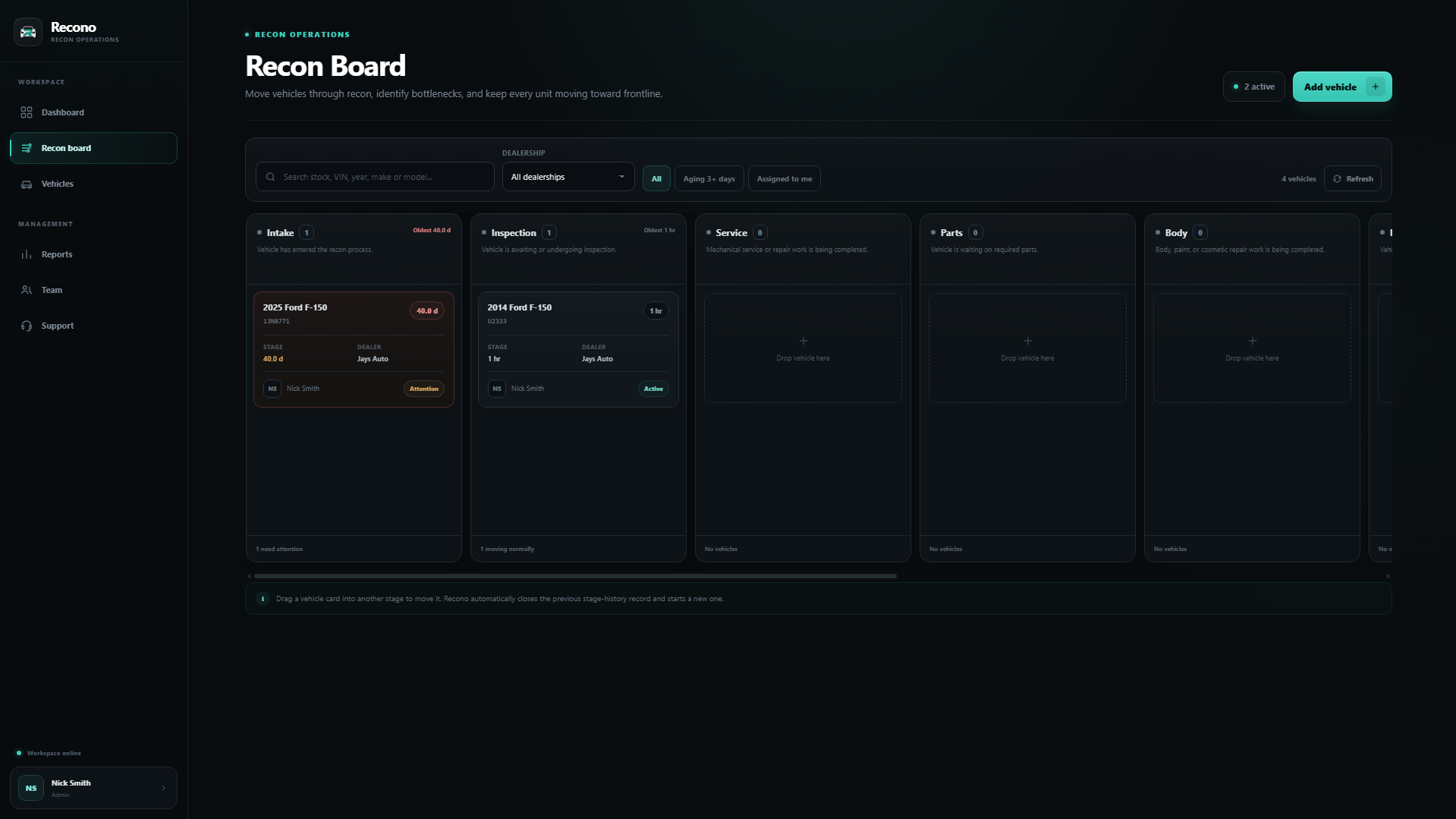
A dealership recon manager needs a live view of every vehicle in the reconditioning workflow, including current stage, time in stage, total recon age, ownership, blockers, and movement history. The software should make handoffs visible and provide reporting that shows repeated bottlenecks.
Normal vehicles should keep moving. The manager needs to spend attention on the exceptions: aging units, blocked handoffs, missing ownership, delayed approvals, and stages that are developing a backlog.
Find vehicles that are already outside the store's expected recon pace.
Separate active work from vehicles waiting on parts, approval, vendors, or another dependency.
Make it obvious who needs to take the next action instead of letting a vehicle sit between departments.
A recon manager should not have to individually notify every stakeholder every time a vehicle moves. A shared board lets authorized users check the current status themselves.
Vehicle status, stage, aging, and assignment stay attached to the unit rather than scattered across communication channels.
When a vehicle sits, the workflow provides context for where it is and what team owns the next movement.
Recon managers are often asked why T2L changed. Stage history helps turn that conversation from opinion into operational evidence. If service time is stable but detail dwell increased, the corrective action is different from a broad “recon is slow” conclusion.
Concise answers to common dealership reconditioning questions related to this topic.
Responsibilities vary by dealership, but recon managers or coordinators typically help move vehicles through inspection, approvals, service, parts, vendor work, detail, merchandising, and frontline handoffs while resolving delays and maintaining visibility.
A shared recon board lets authorized users see the current vehicle stage and status themselves instead of relying on repeated calls, texts, or spreadsheet updates.
A practical review includes aging active units, blocked vehicles, stage backlogs, unclear ownership, expected frontline completions, and decisions requiring escalation.
Stage history shows where vehicles actually spent time, allowing repeated delays to be identified and process changes to be evaluated with data.
Yes. Recono is designed as a shared rooftop workspace for authorized users across the teams that touch the recon process.
A rooftop can start by adding vehicles directly and representing its existing recon stages, allowing the team to test the workflow without waiting for a DMS project.
Start with a few live vehicles and give your rooftop a shared view of the reconditioning process.